
How Electric Bumper Cars Work: The Engineering Behind the Ride
Dodgems, another name for bumper cars, are one of the most well-known features at amusement parks throughout the globe. They provide a unique form of entertainment as drivers are deliberately urged to collide with one another. However, a well-thought-out system of low-voltage electrical distribution, mechanical parts, and impact-absorbing materials is hidden beneath the lighthearted mayhem. Knowing how electric bumper cars operate demonstrates both the inventiveness of early entertainment engineers and the ongoing improvements made by contemporary producers.
Powering the Cars
Most conventional bumper car rides run on low-voltage direct current, which ranges between 24 and 90 volts, much below the level of normal mains power. This low voltage is critical for rider safety since drivers make direct contact with the vehicle and the ride floor. The electricity must also be provided to a moving vehicle, which brings us to the three basic power distribution systems.
The overhead grid system is the oldest and most widely used approach. This concept has a network of conductive metal rails or a charged mesh hung above the ride area. Each bumper vehicle has a vertical pole in the back, capped with a carbon or copper contact shoe. As the automobile travels, the shoe slides along the overhead conductor, collecting current. The current flows down the pole and into the car’s motor control circuit. The circuit is completed by passing through the metal floor, which is generally done via a tiny floor contact or conductive wheels that brush against the surface. The floor is linked back to the power supply, completing the cycle.
A floor pickup system is another frequent configuration. Instead of an overhead grid, the floor is split into insulated conductive strips organized in a pattern, commonly alternating between positive and negative polarity. Brushes or flexible metal wipers on the underside of the vehicle gather electricity as they pass through these strips. This technology reduces the visual clutter of ceiling grids and poles, making it popular in indoor family entertainment centers and themed attractions.
A third, increasingly widespread option is battery operation. Battery-powered bumper cars carry rechargeable battery packs inside the vehicle body. A charging system may be built into the ride platform or positioned at a docking station. When the ride is not in operation, the cars are plugged in or driven onto charging plates. Battery cars offer greater layout flexibility because they do not require fixed electrical infrastructure, and they can be used on temporary or portable setups, such as traveling fairs and smaller indoor venues.
The Motor and Control System
Every electric bumper vehicle is powered by a tiny DC electric motor. When the driver pushes the accelerator pedal, a switch or electronic controller closes the circuit, providing power to the motor. The motor rotates and drives the wheels using a chain, belt, or gear reduction mechanism. Releasing the pedal reduces power, enabling the automobile to coast. Reverse is not commonly accessible on traditional models; however, some newer vehicles incorporate it for simpler navigation.
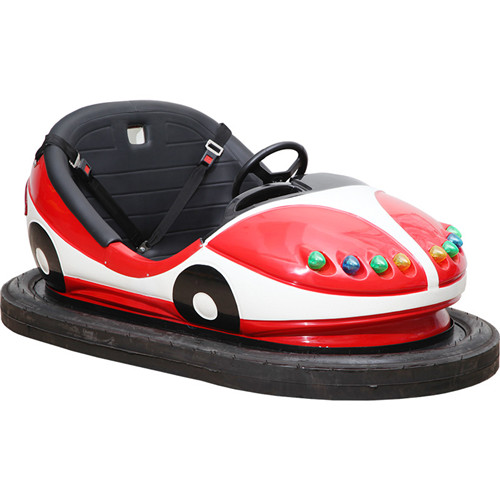
Speed control is purposefully simple. Most bumper vehicles have a maximum speed of 3 to 7 mph (5 to 11 km/h). This limit is met by motor selection, gear ratios, and voltage management. The low speed is critical: it keeps collisions entertaining without being hazardous. The mechanical steering system is similarly uncomplicated. The driver spins a steering wheel that is connected to the front wheel or wheels via a shaft and connection. Some designs have a full 360-degree rotating steering system, which allows the automobile to travel backward when the wheel is rotated far enough.
Impact Protection and Chassis Design
Modern bumper cars are often built of fiberglass or high-density polyethylene. These materials are lightweight enough to allow the little motor to move readily while remaining sturdy enough to resist repeated collisions. In contrast, most chassis are made of welded steel tube or plate. This low, hefty foundation provides stability and helps maintain the car’s center of gravity close to the ground, lowering the risk of tipping.
Around the perimeter of the car is the vital impact-absorbing bumper. Traditional designs use an inflatable rubber tube, while many modern cars use solid polyurethane foam or rubber profiles. When two cars collide, the bumper compresses, converting kinetic energy into heat and deformation. Much of the remaining energy is dissipated as the cars rebound and spin. The combination of a heavy chassis, low speed, and a flexible bumper transforms what could be a jarring impact into the familiar, satisfying bump.
Inside the car, padded seats and simple lap belts are standard. The controls are kept within easy reach, and the interior is free of hard edges. The car’s electrical components are enclosed and insulated to prevent contact with riders.

Safety Systems and Daily Maintenance
Electrical safety is the top issue during each bumper car trip. The power supply for overhead grid and floor pickup systems comprises circuit breakers, ground fault protection, and an emergency stop button at the operator’s station. The riding area floor is maintained dry since moisture might provide unexpected electrical channels. Riders may come into contact with insulated or low-voltage conductive elements.
Daily upkeep is basic yet necessary. Operators assess the contact shoes or pickup brushes for wear, examine the bumpers for cuts or deflation, and test the motor controllers and steering connections. Clean the conductive strips of floor pickup systems on a regular basis to eliminate dirt and debris. Battery-powered vehicles require periodic battery voltage monitoring and charging cycle control. Because the vehicles are subjected to frequent collisions, bolts and fasteners must be examined on a regular basis to avoid loosening.
Modern Variations
The core concepts of the electric bumper vehicle have remained relatively unchanged over the last century, although manufacturing processes and electronics have evolved significantly. Modern automobiles frequently have long-lasting LED lighting, themed body shells, music systems, and electronic controls that may remotely change speed or deactivate specific vehicles. Some manufacturers now provide double-seat automobiles for parents and children, as well as vehicles intended to meet unique demands.
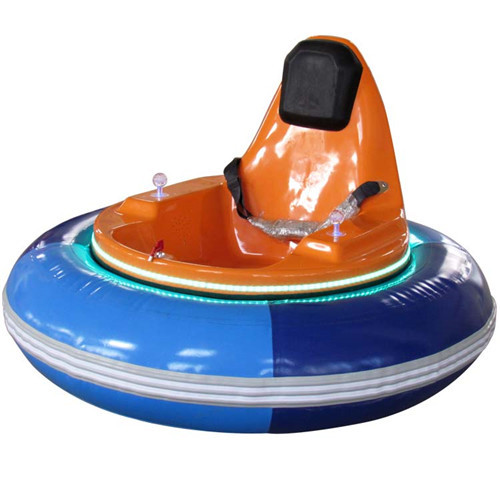
Manufacturers such as Dudu Amusements produce both traditional overhead-powered bumper cars and battery-operated models. Their product lines include single- and double-seat designs with customizable themes and floor-pickup systems that preserve the classic ride experience without requiring a ceiling grid. For park operators, the focus is on durability, ease of maintenance, and compliance with international safety standards such as ASTM and EN.
Conclusion
Electric bumper cars function because many simple systems are properly coordinated: a low-voltage power source, a modest DC motor, a tough steel chassis, and a pliable rubber bumper. The overhead grid or floor pickup securely supplies power to a moving vehicle; the motor offers just enough speed to keep things exciting; the steering allows for flexibility of movement; and the bumper absorbs the energy of each impact. The ride appears to be cheerful chaos, but it is actually a controlled display of fundamental electrical and mechanical engineering principles. For more than a century, bumper vehicles have remained popular due to their blend of safe, predictable physics wrapped in fun design.