
How to Choose a Suitable Blower for an Inflatable Slide
Birthday parties, school functions, local celebrations, and commercial rental companies all often use inflatable slides. When properly put up, they provide a high-energy, safe appeal while also bringing excitement and promoting active play. However, the blower is the key to dependable functioning, not the slide cloth itself. Selecting an appropriate blower affects the slide’s ability to remain completely inflated, function safely under weight, operate effectively, and endure repeated usage. In order to choose a blower that fits both your inflatable slide and your operational circumstances, this article talks you through the important aspects to take into account.
Why the Blower Matters (More Than You Think)
In essence, an inflatable slide is a sizable air structure that depends on constant airflow to keep its stiffness and shape. Even when kids climb, slide, bounce, or move around inside the slide, the blower must provide adequate air volume (measured in cubic feet per minute, or CFM) to maintain the slide’s stability. The slide will droop, wrinkle, or partially deflate if the blower is too small, resulting in pinch spots, unstable surfaces, and possible safety risks. Even while many contemporary blowers are made to be effective with a variety of inflatables, if it’s too big, you could have to pay more up front and use more power than you need.
Beyond airflow, the blower’s power source, pressure capability, noise level, safety features, durability, and compatibility with your slide’s blower tube all influence day-to-day usability. For commercial operators, reliability and serviceability become even more important because downtime directly affects revenue and customer satisfaction.
Step 1: Understand Your Inflatable Slide Requirements
Compile the parameters supplied by the maker of the inflatable slide before comparing blower variants. The product tag, instruction manual, or internet listing of the majority of respectable manufacturers offer suggested blower specifications. The size, internal air chambers, architectural complexity, and planned usage (residential vs. commercial) of the slide all play a role in these suggestions.
Key specifications to look for:
- Recommended CFM (airflow): This is the most critical number. A small backyard slide might need 600–900 CFM, while large commercial slides can require 1,200–2,000+ CFM.
- Static pressure / operating pressure: Some slides, especially those with many internal baffles or long air columns, require higher pressure to keep all sections firm. Blowers are rated in inches of water column (in. WC) or similar pressure metrics.
- Blower tube diameter and connection type: Slides typically use a standard blower tube (often 1.5–2 inches or metric equivalents). Ensure the blower outlet matches the tube size and has a secure, airtight fit.
- Power requirements: Voltage (110V/120V common in residential; 220V/240V common in commercial), amperage, and whether the blower is designed for continuous operation.
If the manufacturer’s recommendation isn’t available, you can estimate needs based on slide size and usage, but it’s always safer to err on the side of slightly higher airflow and confirm with the manufacturer or a knowledgeable supplier.
Step 2: Match Airflow (CFM) to the Slide Size and Usage
Before comparing blower models, collect the specs offered by the inflatable slide maker. Most respectable manufacturers publish suggested blower specifications on the product tag, instruction manual, or web page. These suggestions are based on the slide’s size, internal air chambers, design complexity, and intended application (residential or commercial).
A practical way to think about sizing:
- Small residential slides (single-lane, modest height): 600–900 CFM is often sufficient.
- Medium slides (two-lane, taller, more complex shapes): 900–1,300 CFM.
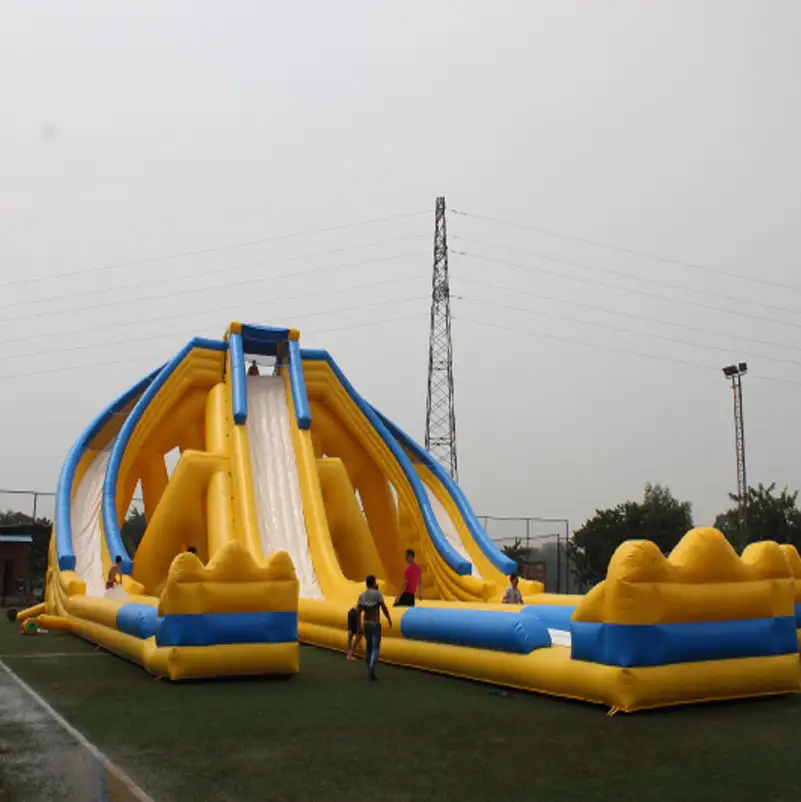
- Large commercial slides (multi-lane, tall towers, long runouts, heavy-duty fabric): 1,300–2,000+ CFM.
- Very large or specialty attractions (giant slides, combo units with climbing walls): May require multiple blowers or specialized high-output models.
Also consider environmental factors. Windy outdoor conditions can push against the slide and create additional stress, so a blower with a bit more headroom helps maintain firmness. Hot weather can soften materials slightly, and cold weather can stiffen them; in both cases, consistent airflow prevents deformation.
Step 3: Evaluate Pressure and Continuous Operation Needs
Not all blowers handle pressure equally. Some are primarily intended for high-volume, low-pressure airflow (as seen in basic inflatables), whilst others produce higher pressure for buildings with restricted interior channels. If your slide has numerous baffles, tiny channels, or a lengthy inflatable run that must remain firm, use a blower rated for higher static pressure.
Continuous operation is another critical consideration. Inflatable slides are typically inflated for hours at a time—sometimes all day at events. Choose a blower explicitly labeled for continuous duty (also called “continuous run” or “commercial duty”). These blowers are built with better bearings, thermal protection, and more durable motors. Residential-grade blowers may overheat or wear out quickly if used continuously, leading to unexpected shutdowns or safety risks.
Step 4: Power Source and Electrical Planning
Blowers come in different voltage configurations:
- 120V (standard household): Convenient for backyard use and many smaller events. Easy to plug into a generator or standard outlet (with adequate amperage).
- 240V (commercial power): Often required for higher-output blowers. More efficient for large slides and reduces current draw, but requires appropriate power distribution and outlets.
When planning power:
- Check the blower’s amperage draw and ensure your power source (outlet, extension cord, generator) can handle it.
- Use heavy-duty, outdoor-rated extension cords sized correctly for the distance and amperage. Undersized cords cause voltage drop, reduced blower performance, and overheating hazards.
- For outdoor events, confirm access to reliable power. If using a generator, choose one with sufficient running watts (and ideally a bit more surge capacity) to start and sustain the blower. Running watts should comfortably exceed the blower’s rated wattage.
Step 5: Safety Features and Compliance
Safety should be non-negotiable. Look for blowers that include:
- Thermal overload protection: Automatically shuts off the motor if it overheats, preventing damage and fire risk.
- GFCI compatibility: Especially important for outdoor use where moisture is present. Many events require GFCI-protected power.
- Sturdy housing and guards: Protect internal components from debris, impacts, and curious fingers.
- Secure mounting options: Some blowers include brackets or straps to keep them stable and prevent movement that could disconnect the blower tube.
- Noise reduction features: Commercial settings often have noise ordinances; quieter blowers improve the experience for guests and staff.
Also, verify that the blower is designed for inflatable use (often labeled “inflatable blower” or “bounce house blower”). General-purpose fans or shop vacuums are not suitable substitutes because they can create unsafe pressure, damage seams, or lack proper continuous-duty construction.
Step 6: Noise Level Considerations
Blower noise is a practical problem in residential areas, indoor venues, schools, and public parks. Manufacturers occasionally provide decibel (dB) ratings. While precise dB comparisons vary depending on the testing technique, selecting a blower branded as “low-noise” or “quiet” can make a significant impact. If noise is a big concern, you may also consider placement: keep the blower farther away (with a longer, suitably sized blower tube), utilize sound barriers, or choose a type noted for its silent operation. Simply verify that the tube length does not cause significant constriction, which lowers airflow.
Step 7: Durability, Maintenance, and Serviceability
For frequent use, prioritize build quality and ease of maintenance. Look for:
- High-quality motor and bearings designed for long hours.
- Weather-resistant construction if used outdoors (even with covers).
- Easy-to-access air intake and filters (if applicable). Some blowers have washable filters that reduce dust and debris intake, extending motor life.
- Availability of replacement parts and service support. Commercial operators should choose brands with reliable customer support and spare parts.
Routine maintenance is simple but important: keep the blower clean, inspect the tube connection before each use, check for overheating signs, and store the blower in a dry, protected place. Replace worn blower tubes promptly—leaks are a common cause of under-inflation.
Step 8: Compatibility and Setup Practicalities
A blower is only as good as its connection to the slide. Confirm:
- The blower outlet diameter matches the slide’s inflation tube.
- The connection is airtight (use the manufacturer’s straps, clamps, or ties; avoid makeshift solutions).
- The blower is placed on a stable, level surface and oriented correctly (intake unobstructed, exhaust directed safely).
- There’s adequate clearance around the intake to prevent blockage by grass, sand, or debris.
Also consider portability. If you move equipment frequently, lighter blowers with handles or carrying cases are easier to transport. If you operate in one location, a heavier, more robust model may be preferable.
Step 9: Budget vs. Long-Term Value
Price is important, but the cheapest blower can become the most expensive if it fails early, consumes excessive power, or creates safety issues. Consider:
- Upfront cost relative to the slide investment and expected usage.
- Operating cost: energy consumption, maintenance needs, and replacement frequency.
- Risk cost: downtime, customer dissatisfaction, potential liability from unsafe inflation.
- Warranty and support: a longer warranty and responsive service often justify a higher price.
Commercial operators often benefit from investing in commercial-duty blowers with proven track records, while homeowners may find a mid-range continuous-duty model perfectly adequate.
Step 10: Common Mistakes to Avoid
- Using an undersized blower: Sagging and unsafe performance are the most frequent failures.
- Using non-inflatable fans/vacuums: Can damage seams or create unsafe pressure.
- Ignoring continuous-duty rating: Leads to overheating and early motor failure.
- Poor electrical planning: Undersized cords, weak generators, or inadequate outlets reduce performance and increase hazards.
- Loose connections and leaks: Even a high-CFM blower can’t compensate for air escaping around the tube.
- Blocking the intake: Debris intake damages motors and reduces airflow.
Final Recommendation: A Practical Selection Checklist
When you’re ready to choose, use this checklist:
- Confirm manufacturer-recommended CFM and pressure.
- Select continuous-duty / commercial-duty construction for frequent use.
- Match voltage and amperage to your power setup; plan cords and generator capacity.
- Prioritize safety features (thermal protection, GFCI compatibility, sturdy housing).
- Check tube compatibility and ensure airtight connections.
- Consider noise requirements and placement options.
- Evaluate durability, maintenance access, and parts/service availability.
- Balance the budget with long-term reliability and safety.
Choosing the correct blower for an inflatable slide is ultimately about matching airflow, pressure, duty rating, power, and safety to the unique needs of your attraction. With careful selection and correct setup, your slide will remain firm, enjoyable, and safe, providing smooth rides and worry-free operation for any occasion.